Indian e-Tourist Visa: the 30-day, 1-year and 5-year options compared, with fees by nationality
The 30-day Indian tourist e-Visa costs $10 if you arrive between April and June and $25 the rest of the year. Five years costs $200 for most passports and $484 for British ones. Which option is actually worth buying, and what gets applications refused.

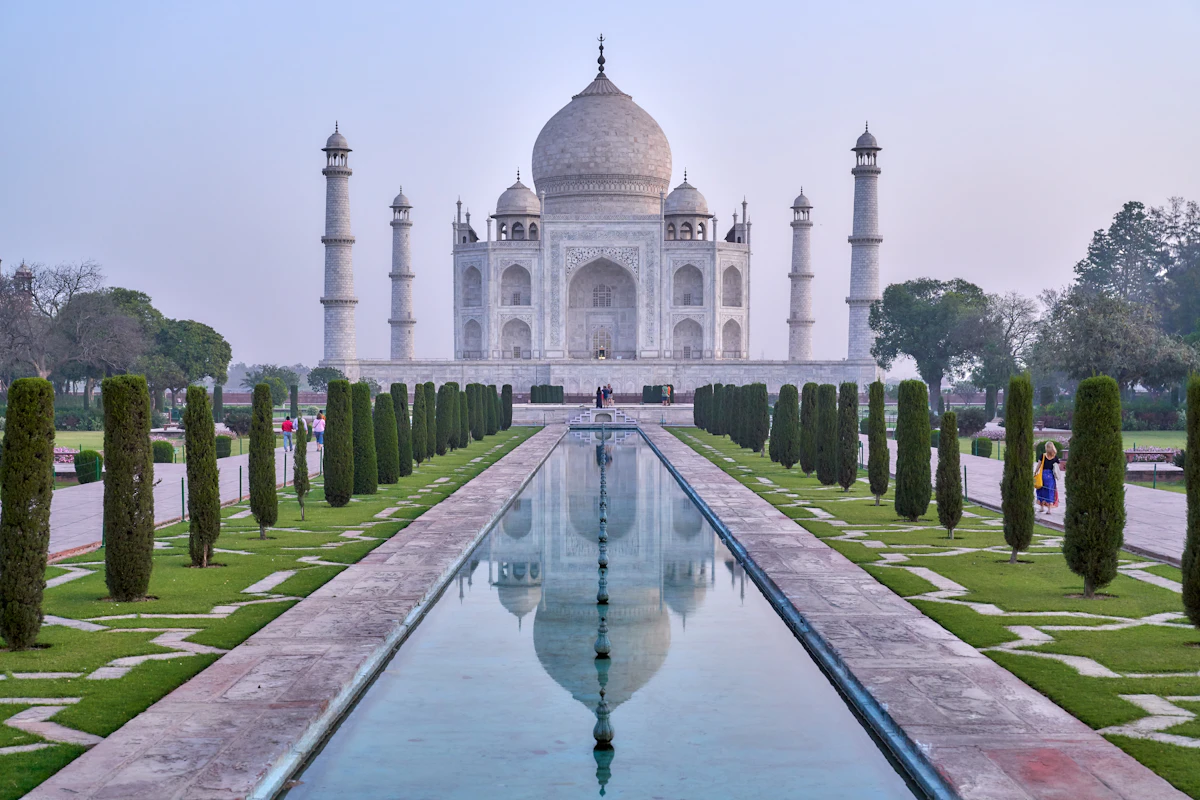
Image selected to support the visa guidance topic. Always confirm final requirements before submitting your application.
Expert document review
Passport, photo, travel purpose, and supporting files checked before submission.
Clear rejection checklist
Each guide focuses on real mistakes that delay or weaken visa applications.
Private assistance service
We are not a government website; we help applicants prepare a stronger file.
India e-Visa review
Get the application checked before submission
We review passport details, photo quality, travel dates, category choice, and common rejection triggers.
There are three Indian tourist e-Visas, not one, and the cheapest of them costs either $10 or $25 depending on nothing more than the month you land. Arrive on 28 June and the 30-day visa is $10. Arrive on 2 July and the same visa, with the same paperwork, is $25.
Which of the three you should buy depends on your passport more than on your trip. The gaps between nationalities are far wider than the gaps between the visas: a five-year tourist visa is $200 for most people, $160 for Americans, $25 for Japanese nationals and $484 for British ones. This guide covers what each option costs, what the visa lets you do, how long you can stay, and what actually gets applications refused. Figures come from the Government of India country-wise e-Tourist fee chart effective 9 July 2026, with a 3% bank charge added on top of whatever you pay.
The short version
Three options: 30 days double entry ($10 April to June, $25 July to March), 1 year multiple entry ($40), 5 years multiple entry ($200). Each stay can run 90 continuous days, or 180 if you hold a US, UK, Canadian or Japanese passport. None of them can be extended or converted. Chinese, Hong Kong, Macau and Pakistani passport holders cannot use the e-Visa system at all.
The three options
They differ in more than length, and the 30-day one is the odd one out.
- The 30-day visa allows two entries and runs for 30 days from the date you arrive, not the date it is issued.
- The 1-year visa allows unlimited entries and runs for 365 days from the date it is granted.
- The 5-year visa allows unlimited entries and runs for five years from the date it is granted.
That distinction matters when you apply. On the 1-year and 5-year visas the clock starts when the government approves it, so applying three months ahead of a trip quietly burns three months of validity. On the 30-day visa it does not, because the clock starts at the airport.
What each one costs
For 138 of the 174 eligible nationalities the schedule is identical: $10 or $25 for 30 days depending on season, $40 for a year, $200 for five years. That covers most of Europe, Canada, Australia, Brazil, Mexico, South Korea, the Gulf states and almost everywhere else.
The other 36 are where it gets interesting:
| Nationality | 30 days (Apr–Jun / Jul–Mar) | 1 year | 5 years |
|---|---|---|---|
| Standard rate (138 nationalities) | $10 / $25 | $40 | $200 |
| United Kingdom, Gibraltar, Jersey, Guernsey, Isle of Man | $10 / $25 | $40 | $484 |
| Mozambique | $10 / $25 | $40 | $220 |
| United States | $10 / $25 | $40 | $160 |
| Singapore | $10 / $25 | $25 | $200 |
| Japan, Sri Lanka | $10 / $25 | $25 | $25 |
| Malaysia, Philippines | Free | $40 | $200 |
| Russia | Free | $40 | $120 |
| South Africa | Free | $25 | $25 |
| 22 nationalities incl. Argentina, Indonesia, Fiji, Jamaica, Mauritius, Mongolia, Myanmar, Seychelles, Uruguay | Free | Free | Free |
Those 22 free nationalities are getting a full e-Visa. The government fee is simply nil, and the 3% bank charge on nil is also nil. You can check any passport against the schedule in our fee calculator or the full table by nationality.
If you hold two passports, compare them before you apply. A British and Irish dual national pays $484 for a five-year visa on the British passport and $200 on the Irish one. The visa that arrives is the same visa.
Is the five-year visa worth it?
A five-year visa is really five one-year visas you do not have to reapply for, so the honest test is whether the five-year price beats buying the one-year five times. Run that against the actual schedule and the answer flips completely depending on your passport.
| Passport | 5-year visa | Five 1-year visas | Verdict |
|---|---|---|---|
| Japan, Sri Lanka, South Africa | $25 | $125 | Saves $100 |
| Russia | $120 | $200 | Saves $80 |
| United States | $160 | $200 | Saves $40 |
| Standard rate (138 nationalities) | $200 | $200 | Identical |
| Mozambique | $220 | $200 | Costs $20 more |
| Singapore | $200 | $125 | Costs $75 more |
| United Kingdom, Gibraltar, Jersey, Guernsey, Isle of Man | $484 | $200 | Costs $284 more |
The comparison is not perfectly like for like, and it is worth saying so. Each one-year visa runs 365 days from the day it is granted, so five of them only cover five continuous years if you time the renewals well. You also repeat the application five times, and the fee schedule can change between renewals.
Still, the practical readings are clear enough. For a Japanese, Sri Lankan or South African passport the five-year visa costs the same as the one-year, so there is no reason to buy the shorter one. At the standard rate it is a wash on money, which makes it worth buying if you expect more than a couple of trips and not worth the outlay if you do not. For a British passport the five-year visa is genuinely hard to justify. Three separate one-year visas cost $120 against $484, and you would need to be going to India most years before the convenience earns that back.
If you only want the cost side in more depth, we have a fuller breakdown in how much an Indian e-Visa costs.
The seasonal price on the 30-day visa
This one catches people because it appears nowhere obvious on the application. The 30-day e-Tourist Visa is $10 for arrivals between April and June and $25 for arrivals from July through March. It is keyed to when you land, not when you apply, so booking a late-June arrival instead of an early-July one is a real $15.
It is a small sum, and nobody should reschedule a holiday over it. But if your dates are already flexible and you are travelling as a family of four, the difference is $60 for changing the flight by a week.
How long you can actually stay
Two separate numbers get confused here: how long the visa lasts, and how long any one visit can be.
On the 1-year and 5-year visas, a continuous stay is capped at 90 days per visit for most nationalities. Holders of US, UK, Canadian and Japanese passports get 180 days per visit. You can leave and come back as often as you like within the validity period, and each visit gets its own allowance.
The 30-day visa is simpler and stricter. Thirty days from arrival, two entries, and that is the whole thing. None of the three can be extended once you are in India, and none can be converted into another visa category. If you need longer or a different purpose, you exit and apply again.
What the tourist visa covers
Sightseeing and recreation, visiting friends or relatives, short-term yoga programmes, and short-duration medical treatment including treatment under Indian systems of medicine.
Not covered: employment of any kind, journalism or filming assignments, research, missionary or NGO work, studying for a qualification, mountaineering, or entering protected and restricted areas without the separate permit those require.
The government's own description of the e-Tourist Visa includes the phrase "casual business visit", which causes a fair amount of confusion. Read it narrowly. It stretches to dropping into a supplier's office while you happen to be in the country on holiday. It does not stretch to a trip whose reason for existing is commercial. If that is your trip, the business e-Visa is the right category, and the question gets asked at immigration rather than during the application.
Documents
- Passport valid at least six months from your arrival date, with two blank pages
- Colour scan of the bio page, sharp enough that the machine-readable zone along the bottom is legible
- Photograph: square, plain white background, JPEG, between 10 KB and 1 MB
- A working email address, because the approved authorisation arrives there
Everyone travelling needs their own passport and their own e-Visa. Infants and children are not covered by a parent's application, and families are often surprised by this at the point of booking.
The photo specification is responsible for more rejections than any other single requirement. Too dark, slightly blurred, cropped wrong, or a background that reads as cream rather than white will all fail. Our free photo tool crops and checks against the exact specification.
Who cannot apply online
Four passports are absent from the government's e-Visa schedule and cannot use the online system at all: China, Hong Kong SAR, Macau SAR and Pakistan. Holders apply for a regular sticker visa through an Indian mission or authorised visa centre instead. Diplomatic and official passport holders are also outside the e-Visa scheme.
Eligibility follows your passport, not where you live. Permanent residence in an eligible country does not make an ineligible passport eligible, and this comes up constantly.
Arrival
The e-Tourist Visa works at 31 designated international airports and 5 seaports. You cannot enter India on it at a land border, which is the single most common planning mistake on overland routes from Nepal. Departure is less restricted: you may leave from any authorised immigration check post.
Print the approved authorisation and carry it with your passport. Officers ask for it routinely even though the visa is electronic. Biometrics are taken on arrival and a physical stamp goes into the passport. If you are arriving from a country where yellow fever is endemic, bring the vaccination certificate.
Why applications get refused
Roughly in order of how often each one bites:
- Name not matching the passport exactly. Dropping a middle name is enough, and so is entering a married name that the passport has not caught up with.
- Photograph failing the specification.
- Passport with under six months of validity from the arrival date.
- A passport scan that is blurred or crops the machine-readable zone, so the data cannot be matched against what you typed.
- Wrong category. Tourist when the trip is commercial, or tourist when the trip is a planned course of medical treatment.
- An arrival date that falls outside the window the visa can cover, usually from applying too far ahead.
The government fee is not refundable once the application is submitted, whatever the outcome. A refusal means paying it again, which is the whole argument for slowing down over the passport scan and the photograph.
Common questions
How much is the Indian e-Tourist Visa?
For most nationalities: $10 for 30 days if you arrive April to June, $25 for 30 days if you arrive July to March, $40 for one year, $200 for five years, plus a 3% bank charge. British passports pay $484 for five years, Americans $160, Japanese and Sri Lankan nationals $25. Twenty-two nationalities pay nothing at all.
Which of the three should I buy?
For a single trip under 30 days, the 30-day visa. For anything longer, or a second trip within the year, the 1-year visa at $40. The 5-year visa is worth it if your passport prices it well, which for Japanese, Sri Lankan, South African, Russian and US passports it does.
How long can I stay per visit?
Ninety continuous days for most nationalities on the 1-year and 5-year visas, 180 days for US, UK, Canadian and Japanese passport holders. The 30-day visa gives 30 days from arrival with two entries.
Can I extend a tourist e-Visa in India?
No. All three are non-extendable and non-convertible. You have to exit India and apply again.
Can I do business on a tourist e-Visa?
Only a casual visit that is incidental to a holiday. If the purpose of the trip is commercial, you need the business category, and the mismatch usually surfaces at immigration.
How long does approval take?
Usually 24 to 72 hours. Allow three to four working days, and apply at least four days before you fly.
Can I enter India by land on a tourist e-Visa?
No. Entry is limited to 31 designated airports and 5 seaports. You can exit from any authorised immigration check post.
Do children need their own e-Visa?
Yes. Every traveller needs an individual passport and an individual e-Visa, including infants.
Fees are taken from the Government of India country-wise e-Tourist Visa fee chart effective 9 July 2026 and can change. Confirm the current figure when you apply. Rules on validity, permitted activity and ports of entry are set by the Indian Ministry of Home Affairs. Apply eVisa India is an independent visa assistance service. We are not affiliated with the Government of India, and the official portal is indianvisaonline.gov.in.
Applying for a tourist e-Visa?
We check the photo, the passport scan and every field against your passport before anything reaches the government portal.
Start my tourist e-Visa applicationDon't Risk a Rejection or a Ruined Trip
One small mistake — a name that doesn't match your passport, the wrong occupation, a non-compliant photo, or the wrong visa category — can get your India e-Visa rejected or frozen in review for weeks. Government fees are non-refundable, a rejection can flag your passport for future applications, and most travelers only find out after they've paid and their flight is days away.
Our visa experts check every detail before submission, catch the errors that cause rejections, and back it with 24/7 human support — so you board your flight with total peace of mind.
Apply Safely With Expert Review →
Reviewed By
Falguni Patel
Former Indian Consular Officer, Toronto
"Former consular officer at the Indian mission in Toronto, Canada, with first-hand experience processing visa and travel-document applications. Now guides international travelers through the Indian e-Visa process."
View author profileFrequently Asked Questions
How much does the Indian e-Tourist Visa cost in 2026?
For 138 of the 174 eligible nationalities the government fee is $10 for a 30-day visa if you arrive between April and June, $25 if you arrive between July and March, $40 for a 1-year visa and $200 for a 5-year visa, plus a 3% bank charge. British passport holders pay $484 for five years, Americans $160, Russians $120, and Japanese, Sri Lankan and South African nationals $25. Twenty-two nationalities pay no government fee at all. Figures are from the Government of India country-wise e-Tourist fee chart effective 9 July 2026.
What is the difference between the 30-day, 1-year and 5-year tourist visas?
The 30-day visa allows two entries and runs for 30 days from the date you arrive in India. The 1-year and 5-year visas allow unlimited entries and run from the date the visa is granted, not from your first entry. All three permit the same activities; only validity, entry count and price differ.
Is the 5-year Indian tourist visa worth it?
It depends entirely on your passport. For Japanese, Sri Lankan and South African nationals the 5-year visa costs $25, the same as the 1-year, so it is obviously worth it. Americans save $40 over five annual visas and Russians save $80. At the standard $200 rate it costs exactly the same as five 1-year visas, so you are buying convenience rather than a discount. For British passport holders the 5-year visa costs $484 against $200 for five annual visas, which is hard to justify unless you travel to India most years.
How long can I stay in India on a tourist e-Visa?
On the 1-year and 5-year visas, up to 90 continuous days per visit for most nationalities, and up to 180 continuous days per visit for holders of US, UK, Canadian and Japanese passports. You may enter as often as you like within the validity period. The 30-day visa allows 30 days from the date of arrival, with two entries.
Can I extend an Indian e-Tourist Visa?
No. All three tourist e-Visa durations are non-extendable and non-convertible to any other visa category. If you need a longer stay or a different purpose you must exit India and apply again from outside the country.
Can I do business on an Indian tourist e-Visa?
Only a casual visit incidental to a holiday, such as dropping into a supplier's office while you are in the country. If the reason for the trip is commercial you need the e-Business Visa. The mismatch typically surfaces at immigration when an officer asks the purpose of your visit, rather than during the application.
Which nationalities cannot get an Indian e-Tourist Visa?
Chinese, Hong Kong SAR, Macau SAR and Pakistani passport holders are absent from the Government of India e-Visa fee schedule and cannot use the online system. Diplomatic and official passport holders are also outside the e-Visa scheme. All of them apply for a regular sticker visa through an Indian mission instead. Eligibility follows the passport, not country of residence.
Can I enter India by land with a tourist e-Visa?
No. The e-Tourist Visa is valid for entry at 31 designated international airports and 5 seaports only. Overland arrivals, including from Nepal, need a regular visa. You may exit India from any authorised immigration check post.
Official Sources
- Government of India e-Visa portal: indianvisaonline.gov.in
- Bureau of Immigration, India: boi.gov.in
Apply eVisa India is a private visa-assistance service. We are not affiliated with the Indian government.